Introduction Harnessing the power of the sun is no longer a futuristic concept. Solar PV (Photovoltaic) systems are now a practical and increasingly popular solution for generating clean, renewable electricity right from your rooftop or property. But how exactly does a solar PV system work? Let’s break it down.
1. What is Solar PV? “Photovoltaic” refers to the process of converting light (photo) into electricity (voltaic). A solar PV system captures the sun’s energy using solar panels and converts it into usable electricity through a process that is both silent and emission-free.
2. How It Works: The Process from Sunlight to Socket
- Step 1: Sunlight Hits the Panels
Each solar panel contains multiple solar cells made from semiconductor materials—usually silicon. When sunlight (photons) hits these cells, it excites the electrons, generating a direct current (DC). - Step 2: Power Travels to the Inverter
This DC electricity flows via specially insulated cables to a central component called the inverter. Since your home or business runs on alternating current (AC), the inverter’s job is to convert DC to AC. - Step 3: Electricity Powers Your Property
Once converted, the AC electricity is routed to your electrical panel (fuse board) and distributed to power your lights, appliances, and other systems. - Step 4: Excess Energy
If your system generates more electricity than you consume, the surplus can either be:- Stored in batteries (if installed)
- Exported to the grid, often for a credit or payment via a feed-in tariff
3. Key Components of a Solar PV System
- Solar Panels – Convert sunlight into DC electricity
- Inverter – Converts DC to AC
- Shunt/Isolation Switches – Provide system safety and manual shut-off
- DC/AC Cables – Transport electricity to and from components
- Battery (optional) – Stores excess energy for use during non-sunny hours
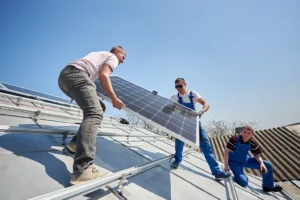
- Mounting System – Secures panels to roof or ground
4. Is Solar PV Efficient? Yes! Most modern panels offer between 20–27% efficiency, with monocrystalline panels being the highest performing. This means that even in Ireland’s climate, you can generate a meaningful amount of electricity year-round.
5. Smart Monitoring Most systems today come with apps or portals allowing you to track your energy generation and usage in real time. This transparency helps you maximise your self-consumption and savings.
Conclusion Solar PV is a brilliant way to reduce your energy bills, your carbon footprint, and your reliance on the grid. Understanding how it works not only empowers better decisions but also helps you maintain your system long-term.
At Moontree Solar, we don’t just install systems—we design them to suit your needs. Want to know if your home or business is suitable for solar? Get in touch today.